
First impressions matter in any workspace, and the floor beneath your feet sets the tone for productivity, comfort, and professionalism. Office carpet tiles have emerged as a superior flooring solution for modern workplaces, combining exceptional durability with remarkable design versatility.
Unlike traditional broadloom carpet, these modular tiles allow for easy installation, simple replacement of damaged sections, and endless creative patterns—from bold brand colors to subtle, professional neutrals. They also reduce noise, ease foot fatigue, and trap allergens, creating a healthier, more focused environment. Whether you’re outfitting a startup studio or a corporate headquarters, office carpet tiles offer a practical, stylish, and budget-friendly foundation for success.
While designing any working space, one of the major decision is the type of flooring you select. According to human psychology, the surface you step onto when you enter a space leaves an unconscious impression on your mind. Moreover, selecting the right kind of floor is also very important since flooring takes a big chunk of the project budget, therefore this choice shouldn’t be taken lightly.
Fortunately with office carpet tiles, you really can’t go wrong. Office carpet tiles are highly functional and practical in terms of usage, as it offers superior comfort, attractive acoustic, and thermal qualities, as well as greater safety, compared to hard flooring alternatives.
Key Benefits of Office Carpet Tiles for High-Traffic Areas
Office floor tiles are particularly useful in busy workplaces because their modular construction combines durability, maintainability, and design flexibility. Individual tiles can be replaced when a section becomes heavily soiled or damaged, avoiding the need to remove the entire floor. Their textile surface can also help absorb sound from footsteps and reduce reverberation compared with harder flooring surfaces, which is useful in open-plan offices.
Cushion-backed products can provide additional underfoot comfort, but performance depends on the specific backing and carpet construction, so specifications should be checked before purchase. For projects requiring professional fitting, carpet installation and repair can support accurate measurement, substrate preparation, installation, and replacement work.
Design Versatility and Aesthetic Appeal
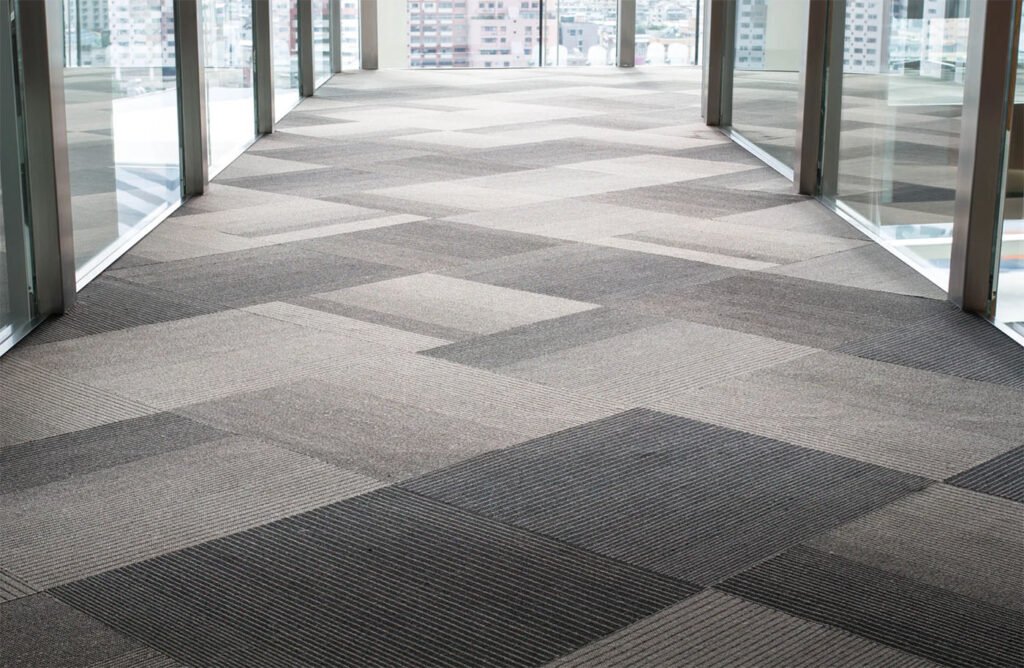
One of the most compelling reasons to choose office carpet tiles is the vast design versatility they offer. Unlike traditional carpet rolls that limit creativity to a single continuous pattern, carpet tiles allow you to mix and match colors, textures, and patterns to create unique floor designs. Businesses can express their brand identity through custom layouts—whether it is a bold, dynamic pattern that energizes a creative workspace or a subtle, neutral scheme for a more formal corporate environment.
Carpet tiles come in a wide range of fibers and textures. Options include loop pile for durability, cut pile for a plush feel, and combinations of both for interesting visual effects. Designers can experiment with different pile heights to create subtle patterns or textured walkways that guide movement through the office. Tiles can be arranged in classic configurations such as monolithic (all tiles aligned in the same direction) or quarter-turn (rotating each tile 90 degrees) to create varied visual effects without additional cost.
Color selection is equally versatile. Companies often integrate brand colors into their flooring, reinforcing corporate identity. For example, accent tiles in company hues can define meeting areas, breakout spaces, or pathways. Gradient effects, checkerboard patterns, and random mixes are popular techniques to achieve a distinctive look. Because tiles are modular, it is easy to update the design later—by swapping out certain tiles for new colors or patterns—without replacing the entire floor.
Lighting conditions, room size, and furniture style all influence design decisions. Darker tiles can create a cozy atmosphere, while lighter shades enhance natural light and make spaces feel more open. Carpet tiles can also complement other flooring materials. Many offices combine tiles with vinyl or wood to define zones, such as transitioning from a reception area to workstations.
The ability to customize without committing to a permanent design is invaluable. If a company rebrands or changes its office layout, the floor can evolve with minimal expense and disruption. This level of aesthetic flexibility is difficult to achieve with any other flooring type, making carpet tiles a favorite among interior designers and forward-thinking businesses.
Practical Benefits: Durability, Maintenance, and Comfort
Beyond their visual appeal, office carpet tiles provide practical advantages that make them an exceptional choice for high-traffic work environments. Durability is paramount in offices where hundreds of employees and visitors move through the space daily. Carpet tiles are engineered with dense fibers and robust backing systems that withstand heavy foot traffic, rolling office chairs, and frequent cleaning.
Maintenance is another key benefit. When a section of flooring becomes stained or worn, individual tiles can be lifted and replaced quickly. This modular approach means that even significant damage does not require replacing the entire carpet, reducing downtime and cost. Many tiles feature stain-resistant coatings and moisture-resistant backings, which help prevent spills from seeping through to the subfloor. Regular vacuuming and occasional deep cleaning are typically sufficient to maintain a fresh appearance.
Comfort is often overlooked in flooring decisions, but it significantly impacts employee well-being. Carpet tiles provide a cushioned surface that reduces foot fatigue for employees who spend long hours standing or walking. This softer underfoot feel can also lower the risk of injury from slips and falls, compared to hard flooring options.
Acoustic performance is another practical advantage. Open-plan offices can be noisy, and excessive sound levels can affect productivity. Carpet tiles naturally absorb sound, reducing echo and dampening noise from footsteps, conversations, and office equipment. Many products are designed with acoustic backing layers for even greater sound insulation, helping create a more focused and comfortable workspace.
Furthermore, carpet tiles can contribute to indoor air quality. High-quality tiles trap dust and allergens until they are vacuumed, preventing particles from circulating in the air. Some manufacturers also incorporate antimicrobial treatments to inhibit mold and bacteria growth.
These combined benefits—durability, low maintenance, comfort, and acoustic improvement—make carpet tiles a practical and economical flooring solution. They deliver long-term value, requiring fewer replacements and less maintenance than many alternative surfaces while enhancing the overall office environment.
Office Carpet Tile Installation and Cost Factors in Dubai
Installing office carpet tiles begins with a clean, dry, sufficiently level subfloor and an installation method appropriate to the selected tile and backing. Depending on the product, tiles may use pressure-sensitive adhesive, pre-applied adhesive, or another manufacturer-approved fixing system; the correct method should always follow the product specification rather than assuming one installation system suits every tile.
In Dubai offices, project costs should be assessed on the complete installation rather than material price alone, including floor preparation, tile quantity, wastage, adhesive or accessories, labour, and future replacement requirements. Professional office carpet tile installation can help ensure accurate layout and secure fitting, while office carpets provide an alternative for businesses considering broader carpet formats.
Sustainability and Future Trends
Sustainability has become a critical consideration in modern office design, and carpet tile manufacturers have responded with eco-friendly innovations. Many leading brands produce tiles using recycled materials such as reclaimed nylon or PET plastics. Some companies operate closed-loop recycling programs, allowing old tiles to be returned and transformed into new products, reducing landfill waste.
Low-VOC (volatile organic compound) adhesives and backings are now common, improving indoor air quality and meeting green building certifications such as LEED or WELL. Some tiles even feature bio-based materials or carbon-neutral manufacturing processes, aligning with corporate environmental goals.
Energy efficiency is another benefit. Carpet tiles provide thermal insulation, helping maintain indoor temperatures and potentially lowering heating and cooling costs. Their sound-absorbing properties also reduce the need for additional acoustic treatments, which can further conserve resources.
Looking ahead, technological advancements promise even greater innovation. Manufacturers are experimenting with smart carpet tiles embedded with sensors that monitor foot traffic, room occupancy, or air quality. These “intelligent floors” could provide valuable data for optimizing office layouts, improving safety, and enhancing energy management.
Design trends are also evolving. Expect to see more nature-inspired patterns and biophilic designs that bring elements of the outdoors inside, promoting employee well-being. Modular tiles with interchangeable layers or reversible designs are emerging, extending product lifespan and enabling easy style updates.
As companies prioritize sustainability and flexibility, office carpet tiles will continue to be a key solution. Their combination of eco-friendly materials, long life cycle, and adaptability aligns perfectly with the future of workplace design. Businesses investing in carpet tiles today are not only enhancing their offices but also supporting a more sustainable and innovative future.
Final Verdict
There are many flooring options for commercial and office spaces but if your main goal is to get a low maintenance and stylish floor while sticking to your budget. Then you could not get any better flooring option other than office carpet tiles. They create a pleasing ambiance and save you a great deal of time and money in installation and maintenance. So, if you are in for office carpet tiles, contact a professional flooring company and get started with your new interior designing project!
