
In Dubai schools and nurseries, flooring is far more than a design choice—it is a critical component of child safety, hygiene, and overall learning environment quality. Educational spaces host high levels of daily activity, from running and play in early years classrooms to structured learning in older grades, which means flooring must be durable, impact-resistant, and safe under constant use. In nurseries especially, where children are still developing coordination, slip resistance and cushioning are essential to reduce the risk of falls and injuries. At the same time, strict hygiene standards must be maintained to prevent the spread of germs in shared environments. Floors must therefore be easy to clean, resistant to stains, and compatible with regular disinfection routines without degrading in quality. In Dubai’s climate, additional considerations such as humidity control, indoor air quality, and low-VOC materials also play an important role in ensuring a healthy indoor environment. As a result, selecting the right flooring for schools and nurseries involves balancing safety, hygiene, durability, and comfort to create spaces that actively support children’s wellbeing and development.
KHDA Safety Standards for Flooring
The KHDA (Knowledge and Human Development Authority) safety standards play a vital role in determining appropriate flooring choices for schools and nurseries in Dubai. These guidelines focus on creating safe, healthy, and child-friendly learning environments by ensuring that all materials used in educational facilities meet strict requirements for durability, slip resistance, hygiene, and impact protection.
Flooring must minimize the risk of injuries, especially in areas where young children are active and prone to falls. KHDA standards also emphasize the importance of using non-toxic, low-VOC materials to maintain good indoor air quality and reduce exposure to harmful chemicals. In addition, flooring systems must be easy to maintain and capable of withstanding heavy daily use without compromising safety or appearance. Schools are also expected to consider fire resistance and emergency evacuation safety when selecting materials.
Compliance with these standards is not only a regulatory requirement but also a commitment to student wellbeing and operational excellence. As a result, administrators often choose specialized flooring solutions such as cushioned vinyl, rubber flooring, or safety-certified tiles that meet or exceed KHDA expectations. Ultimately, these standards ensure that every classroom, corridor, and activity area in Dubai schools supports a secure and hygienic environment where students can learn and grow confidently.
Soft Flooring: Rubber vs. Foam for Fall Heights
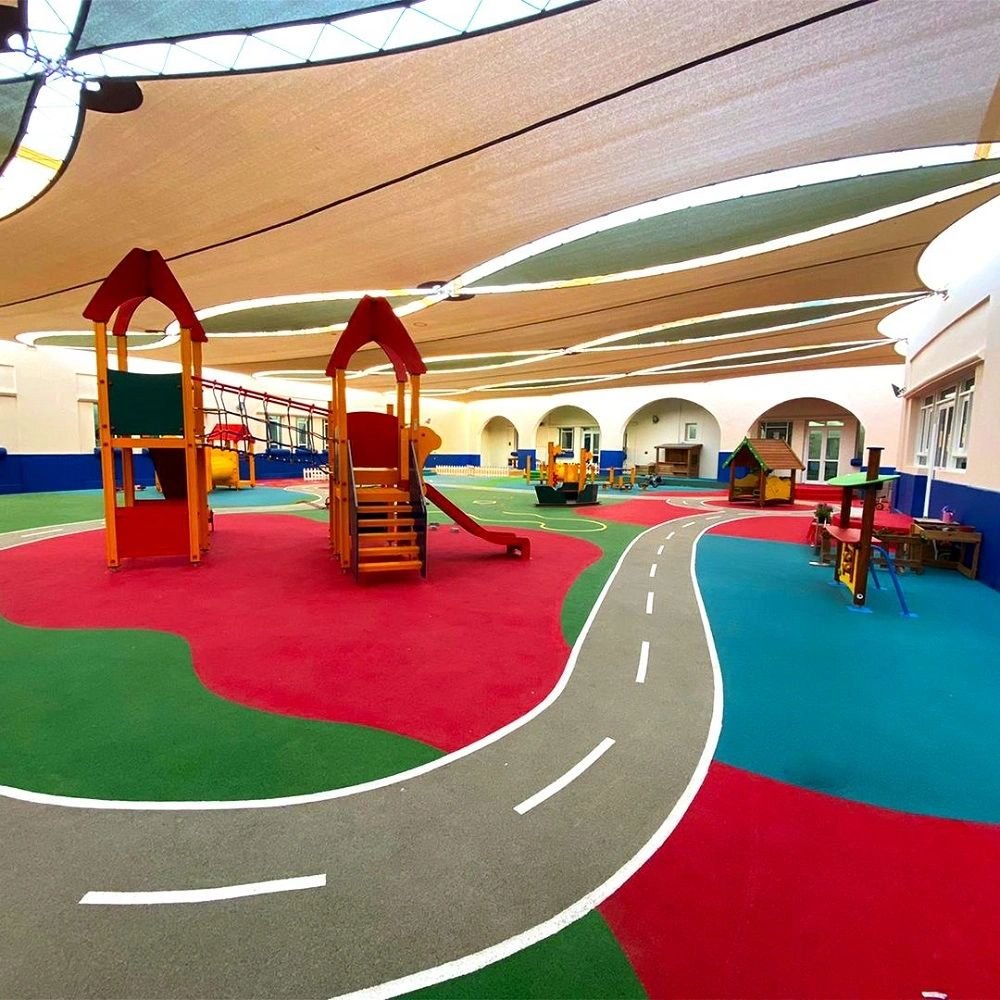
Soft flooring is essential in Dubai nurseries and early years classrooms where children are constantly moving, playing, and learning motor skills. When comparing rubber and foam flooring for fall height protection, each material offers distinct advantages. Rubber flooring is highly durable, impact-resistant, and provides consistent shock absorption over time, making it suitable for high-traffic play areas and long-term installations. It performs well under heavy use and is less likely to compress or lose thickness, which ensures sustained safety performance.
Foam flooring, on the other hand, offers a softer initial cushioning effect, which can be beneficial in areas designed specifically for toddlers and low-height activities. However, foam is generally less durable than rubber and may wear out faster in busy environments such as school nurseries. It can also be more prone to tearing or permanent compression.
From a safety perspective, both materials can help reduce injury risks from falls, but rubber is often preferred for compliance with higher fall-height requirements due to its stability and longevity. Foam is typically used in smaller, controlled play zones where maintenance is easier. Ultimately, the choice depends on balancing safety standards, durability needs, and the specific activity level of each learning space.
Vinyl Sheet for Hygiene in Canteens & Labs
Vinyl sheet flooring is one of the most widely used solutions in Dubai school canteens and science laboratories due to its strong hygiene performance and seamless installation. Unlike tile flooring, vinyl sheets are installed in large continuous rolls, which significantly reduces or eliminates grout lines where dirt, bacteria, and moisture can accumulate. This makes cleaning faster, more efficient, and more effective, especially in environments where food preparation or chemical handling occurs.
In canteens, vinyl’s smooth, non-porous surface prevents food spills and liquids from penetrating the floor, reducing the risk of contamination and unpleasant odors. In laboratories, it provides a similarly hygienic surface while also offering resistance to mild chemicals and frequent cleaning agents. Many modern vinyl products also come with antimicrobial coatings that further enhance hygiene standards in high-use educational environments. Additionally, vinyl sheet flooring is comfortable underfoot, which benefits staff who stand for long periods.
It is also slip-resistant when properly specified, improving safety in wet or spill-prone areas. In Dubai’s hot and humid climate, vinyl performs well due to its moisture resistance and stability. Overall, it is a practical, cost-effective, and highly hygienic flooring option that supports strict cleanliness requirements in school food service and science areas.
Epoxy for Chemical Resistance in Science Rooms
Epoxy flooring is an ideal solution for science laboratories in Dubai schools due to its exceptional chemical resistance and durability. Science rooms frequently handle a variety of substances, including mild acids, cleaning agents, and experimental chemicals, which can damage traditional flooring materials over time. Epoxy creates a seamless, non-porous surface that prevents chemicals from penetrating and causing structural damage or stains.
This makes it highly suitable for environments where spills are common and quick cleanup is essential. In addition to chemical resistance, epoxy flooring is also highly durable and capable of withstanding heavy equipment, frequent movement of lab furniture, and constant foot traffic from students and teachers. Its smooth surface enhances safety by reducing dust accumulation and making cleaning more efficient. Many epoxy systems can also be customized with anti-slip additives to improve traction in wet or spill-prone conditions, further enhancing safety standards.
In Dubai’s school environment, where hygiene and compliance with safety regulations are critical, epoxy flooring supports long-term operational efficiency. It also contributes to a professional, modern appearance in laboratory spaces. Overall, epoxy flooring provides a strong combination of safety, chemical resistance, and low maintenance, making it a preferred choice for educational science facilities.
Carpet Tiles for Acoustics in Libraries
Carpet tiles are a highly effective flooring solution for school libraries in Dubai, primarily due to their excellent acoustic performance and flexibility. Libraries require quiet environments that support concentration, reading, and independent study, and carpet tiles help absorb sound from footsteps, chair movement, and general activity.
This significantly reduces noise levels and creates a more comfortable learning atmosphere for students. Unlike wall-to-wall carpeting, carpet tiles offer modular installation, which makes them easy to replace individually if a section becomes stained or damaged.
This is particularly useful in busy school environments where maintenance efficiency is important. Carpet tiles also come in a wide range of colors and patterns, allowing schools to create visually organized zones such as reading areas, group study spaces, and computer sections. In addition to acoustic benefits, they provide a soft underfoot feel, improving comfort during long study sessions.
Many modern carpet tiles are also manufactured with stain-resistant and low-VOC materials, aligning with hygiene and indoor air quality standards in Dubai schools. While they require regular vacuuming to maintain cleanliness, their durability and replaceability make them a cost-effective long-term option. Overall, carpet tiles strike an effective balance between comfort, noise control, and practicality in educational library environments.
Slip Resistance for Wet Areas
Slip resistance is a critical safety requirement for flooring in wet areas of Dubai schools, including bathrooms, locker rooms, cafeterias, and entrance zones exposed to moisture. These areas are high-risk environments where water spills, cleaning activities, and humidity can significantly increase the chance of slips and falls. To address this, flooring materials must have certified slip-resistant ratings that ensure adequate grip even when wet.
Textured vinyl, anti-slip ceramic tiles, and rubber flooring are commonly used solutions in such spaces. The surface texture plays a key role in improving traction without compromising ease of cleaning. In addition, proper drainage design is essential to prevent water accumulation on the floor surface. Schools must also consider maintenance practices, as cleaning methods should preserve the anti-slip properties rather than reduce them over time.
In Dubai’s climate, where humidity can be high and water usage frequent, maintaining slip resistance is particularly important for student and staff safety. Regular inspections and adherence to safety standards help ensure long-term performance of the flooring. Ultimately, selecting the right slip-resistant flooring minimizes accident risks, supports regulatory compliance, and contributes to a safer learning environment across all wet zones within educational facilities.
Easy Cleaning: No Grout Lines
Easy-to-clean flooring is essential in Dubai schools, where maintaining high hygiene standards is a daily requirement. One of the most effective design features for improving cleanliness is the elimination of grout lines. Traditional tiled floors with grout joints often trap dust, dirt, bacteria, and moisture, making them harder to sanitize thoroughly.
In contrast, seamless flooring options such as vinyl sheets, epoxy coatings, and polished surfaces provide smooth, continuous finishes that significantly reduce contamination risks. Without grout lines, cleaning becomes faster and more efficient, requiring less scrubbing and fewer harsh chemicals. This not only improves hygiene but also reduces long-term maintenance costs for schools.
In environments such as classrooms, cafeterias, and laboratories, where frequent cleaning is necessary, seamless flooring helps maintain a consistently sanitary surface. It is especially important in nurseries and primary schools, where children are more vulnerable to germs.
In Dubai’s climate, where dust and sand can easily enter buildings, easy-to-clean flooring also helps maintain indoor air quality and overall cleanliness. Additionally, seamless surfaces provide a modern aesthetic and contribute to a more organized learning environment. Overall, eliminating grout lines is a practical strategy that enhances hygiene, efficiency, and durability in school flooring systems.
Anti-Static Flooring for Computer Labs
Anti-static flooring is an important requirement for computer labs in Dubai schools, where sensitive electronic equipment is used daily. Static electricity can damage computers, disrupt network systems, and create discomfort for users, especially in dry indoor environments with heavy air conditioning. Anti-static flooring is designed to safely dissipate electrical charges, preventing the buildup of static electricity on surfaces and reducing the risk of equipment malfunction.
Common materials include specialized vinyl, rubber, or conductive flooring systems that are engineered to maintain controlled electrical resistance. In addition to protecting devices, anti-static flooring also enhances user safety by reducing sudden static shocks that can occur when touching computers or metal surfaces. This creates a more comfortable and stable learning environment for students and teachers.
In Dubai’s educational facilities, where technology integration is a key part of modern learning, maintaining the reliability of computer systems is essential. Anti-static flooring also supports better equipment longevity, reducing maintenance and replacement costs over time. It is typically paired with proper grounding systems to maximize effectiveness. Overall, anti-static flooring is a critical infrastructure component in school computer labs, ensuring both equipment protection and a safe, efficient digital learning environment.
Noise Reduction in Classrooms
Noise reduction is a key factor in creating effective learning environments in Dubai classrooms, where high student activity can easily lead to distracting sound levels. Flooring plays a major role in controlling acoustic performance, helping to absorb impact noise from footsteps, chairs, and movement. Materials such as carpet tiles, rubber flooring, and cushioned vinyl are commonly used because they reduce sound transmission and improve overall classroom acoustics.
By minimizing background noise, students can focus better, understand lessons more clearly, and experience less cognitive fatigue during the school day. Teachers also benefit from improved speech clarity, reducing the need to raise their voices.
In multi-storey school buildings, acoustic flooring helps prevent noise from traveling between floors, contributing to a more controlled learning environment. In Dubai’s modern schools, where open-plan designs and collaborative learning spaces are becoming more common, managing noise levels is even more important.
Proper underlayment systems can further enhance sound insulation performance. Additionally, noise-reducing flooring contributes to student wellbeing by creating a calmer, more comfortable atmosphere. Overall, investing in acoustic flooring solutions is essential for improving concentration, communication, and the overall quality of education in school environments.
FAQ
What flooring is required for nursery play areas?
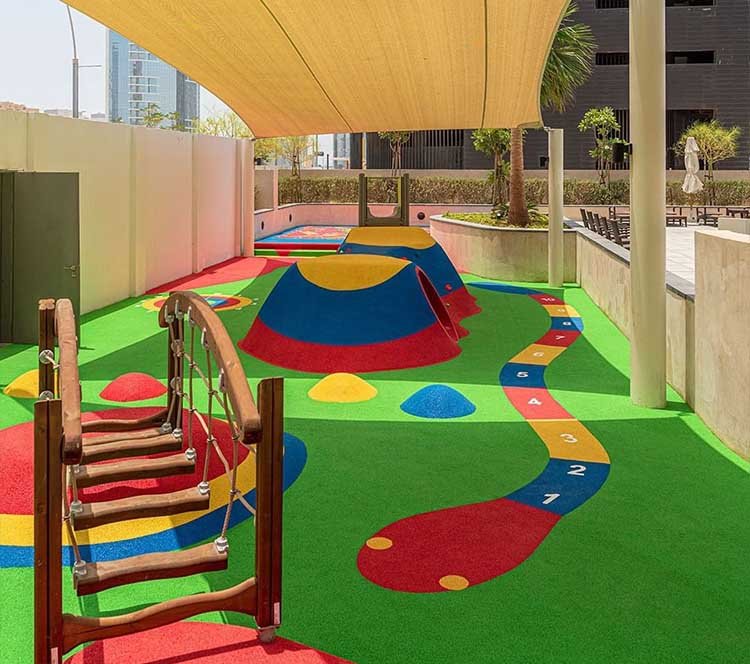
Impact-absorbing rubber with a critical fall height rating.
Is sheet vinyl allowed in KHDA schools?
Yes, seamless welded vinyl is preferred for hygiene.
What flooring is easiest to clean for schools?
Epoxy coating has no joints and can be pressure washed.
Can schools use carpet in classrooms?
Yes, low-pile carpet tiles that can be individually replaced.
What flooring prevents slipping in science labs?
Epoxy with quartz aggregate for high slip resistance.
Is bamboo flooring suitable for schools?
No, it is too hard and scratches easily from chairs.
Do schools need anti-static flooring for computer labs?
Yes, to prevent electrostatic discharge damaging electronics.
What underlayment for school carpet?
Rubber crumb underlay for impact absorption.
Can school gyms use vinyl flooring?
Yes, but specialized sports vinyl with shock absorption.
