
Epoxy flooring has become an increasingly popular choice for homeowners and commercial spaces alike due to its durability, versatility, and aesthetic appeal. Unlike traditional flooring options such as tiles or wood, epoxy creates a seamless, high-gloss surface that is resistant to stains, chemical spills, and heavy foot traffic. Its unique properties make it suitable for a wide range of applications, from garages and kitchens to basements and outdoor decking areas.
Understanding the benefits and proper maintenance of epoxy floors is essential for maximizing their lifespan and performance. By learning the installation techniques, care tips, and comparisons with other flooring types, homeowners can make informed decisions and ensure their floors remain functional and attractive for years.
This comprehensive guide explores everything you need to know about epoxy floors, including surface preparation, application methods, maintenance strategies, and environmental considerations.
Introduction to Epoxy Flooring and Its Advantages Over Other Materials
Epoxy flooring is composed of resin and hardener that chemically react to form a durable, rigid, and smooth surface. Its advantages over traditional flooring materials include:
- Seamless Finish: Unlike tiles or wooden planks, epoxy creates a uniform surface without joints or gaps, reducing places where dirt and bacteria can accumulate.
- High Durability: Resistant to wear, impact, and chemical spills, epoxy is ideal for high-traffic areas and spaces exposed to moisture.
- Aesthetic Versatility: Available in various colors, finishes, and textures, epoxy can complement modern, industrial, or even decorative home styles.
- Easy Maintenance: The smooth surface allows for quick cleaning, reducing the need for intensive upkeep.
Epoxy’s combination of performance, appearance, and practicality makes it an attractive option for homeowners seeking both functionality and style.
Understanding the Surface Preparation Needed Before Epoxy Application
Proper surface preparation is crucial for the longevity and effectiveness of epoxy floors. The following steps ensure strong adhesion and a smooth finish:
- Clean the Area Thoroughly: Remove dust, grease, and any existing coatings. A degreasing solution can help with stubborn stains.
- Repair Any Damage: Fill cracks or chips with epoxy filler or concrete repair compound to create an even surface.
- Sanding or Etching: Use mechanical grinding or mild acid etching to roughen the surface, improving bonding with the epoxy.
- Remove Dust and Debris: Vacuum or wipe down thoroughly after sanding or etching. Any residue can cause bubbles or peeling.
- Apply a Primer Coat: A primer layer enhances adhesion and provides a solid base for the topcoat.
Following these steps prevents adhesion failures and ensures a smooth, durable finish that can withstand daily wear and tear.
Different Techniques for Applying Epoxy to Achieve a Durable Finish
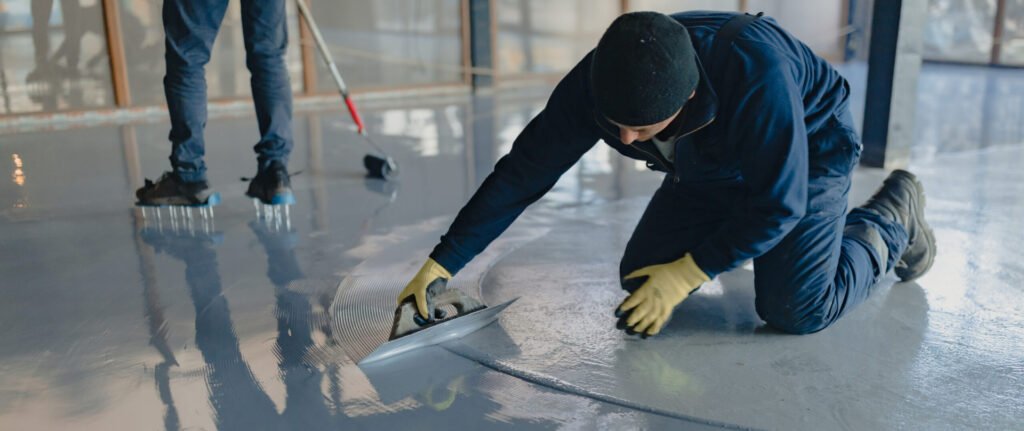
Applying epoxy correctly requires careful attention to detail and proper tools. Key techniques include:
- Accurate Mixing: Combine the resin and hardener according to the manufacturer’s specifications to ensure proper curing.
- Sectional Application: Work in small areas to maintain wet edges and avoid visible lines.
- Using Rollers and Brushes: Long-handled rollers are ideal for even coverage, while brushes help reach corners and edges.
- Removing Air Bubbles: Lightly pass a heat gun or torch over the surface to release trapped air, preventing imperfections.
- Decorative Additions: Sprinkle color flakes, quartz, or metallic pigments while the epoxy is still wet for a customized appearance.
By following these techniques, homeowners can achieve a professional-quality finish that combines beauty and strength.
How to Maintain Epoxy Floors for Long-Term Durability
Epoxy floors are relatively low-maintenance, but routine care is essential for prolonging their life and appearance. Key tips include:
- Daily Cleaning: Sweep or vacuum to remove dirt, dust, and debris.
- Mopping: Use a mild detergent mixed with water. Avoid abrasive cleaners that can scratch the surface.
- Protective Measures: Place pads under heavy furniture to prevent scratches and dents.
- Repair Minor Damage Promptly: Small chips or scratches can be patched using epoxy repair kits.
- Periodic Recoating: High-traffic areas may benefit from a thin epoxy recoat every few years to maintain a fresh finish.
Consistent care ensures that your epoxy for floors remains strong, visually appealing, and resistant to wear.
Comparing Epoxy Flooring with Porcelain Tile and Other Alternatives
When considering flooring options, it’s helpful to compare epoxy with common alternatives:
- Porcelain Tile: Highly durable and water-resistant, porcelain tile offers a traditional aesthetic but requires grout maintenance and can crack under heavy impact.
- Wood or Laminate: Offers warmth and natural beauty, but is prone to moisture damage, scratches, and requires periodic refinishing.
- Epoxy Flooring: Provides a seamless, chemical-resistant surface with minimal maintenance and high durability. Unlike tiles or wood, it does not crack or require grout cleaning, making it ideal for areas with heavy use.
By understanding these differences, homeowners can make informed choices based on durability, aesthetics, and maintenance preferences.
Tips for Using Epoxy Flooring in Outdoor Decking Areas
Epoxy isn’t limited to indoor spaces; it can also enhance outdoor areas such as patios, decks, and walkways. Key considerations include:
- Weather Resistance: Choose epoxy formulations designed to withstand UV exposure, rain, and temperature fluctuations.
- Proper Surface Preparation: Outdoor concrete or wood surfaces must be cleaned and sanded thoroughly for optimal adhesion.
- Slip Resistance: Add texture or aggregates to the topcoat to prevent slipping, especially in wet conditions.
- Regular Cleaning: Outdoor surfaces accumulate dirt and debris quickly, so periodic washing is essential.
- Inspection and Maintenance: Monitor for cracks or peeling and repair promptly to maintain a safe and attractive surface.
Outdoor epoxy floors can provide a long-lasting, visually appealing solution when installed and maintained correctly, enhancing both functionality and safety.
Environmental Considerations When Choosing Epoxy Flooring
Choosing the right epoxy also involves understanding environmental impacts and conditions:
- Moisture Levels: Excessive moisture in the subfloor can prevent proper adhesion. Moisture testing and barrier coatings may be necessary.
- Temperature and Humidity: Extreme conditions can affect curing. Optimal indoor conditions are generally required for best results.
- UV Exposure: Prolonged sunlight can cause discoloration in some epoxy types, so UV-stable formulations are recommended for outdoor applications.
- Chemical Resistance: Epoxy can resist household chemicals, oils, and solvents, making it ideal for kitchens, garages, and workshops.
Considering these factors ensures that epoxy floors remain durable, visually appealing, and environmentally suitable for their intended location.
Conclusion
Epoxy flooring offers a unique combination of durability, aesthetics, and low maintenance, making it a versatile option for both indoor and outdoor spaces. With proper surface preparation, careful application, and consistent maintenance, epoxy floors can provide long-lasting beauty and functionality.
When compared to alternatives such as porcelain tile or traditional wooden flooring, epoxy stands out for its seamless finish, chemical resistance, and resilience under heavy use. Additionally, incorporating epoxy into outdoor areas like decking or patios enhances both visual appeal and safety.
Investing time in understanding the benefits, installation techniques, and maintenance strategies ensures that your epoxy for floors remains a functional, attractive, and long-lasting flooring solution for years to come.
FAQs
Why choose epoxy for floors over traditional flooring?
Epoxy provides a seamless, durable, and chemical-resistant surface that requires less maintenance than wood, tile, or laminate.
How do you clean and maintain epoxy floors?
Sweep or vacuum daily, mop with mild detergent, avoid abrasive cleaners, and touch up minor damages as needed.
Can epoxy floors be installed outdoors?
Yes, UV-stable and weather-resistant epoxy formulations can be applied to outdoor patios, decks, and walkways.
How does epoxy compare to porcelain tile in durability?
Epoxy is highly resistant to chemicals, impacts, and heavy traffic. Unlike tiles, it is seamless and less prone to cracking or grout issues.
What are the common challenges in epoxy floor installation?
Challenges include surface preparation, correct mixing ratios, avoiding air bubbles, and proper curing under the right environmental conditions.
Can epoxy floors be used in wet or humid areas?
Yes, epoxy is water-resistant and can be used in bathrooms, kitchens, and basements if the subfloor is properly prepared.
How long does it take for epoxy floors to fully cure?
Curing time typically ranges from 24 to 72 hours depending on the epoxy type, temperature, and humidity.
What maintenance steps help epoxy floors last longer?
Routine cleaning, protective measures against heavy furniture, avoiding harsh chemicals, and occasional recoating in high-traffic areas.
Is epoxy suitable for high-traffic commercial areas?
Yes, its durability, chemical resistance, and seamless surface make epoxy ideal for both residential and commercial high-traffic zones.
Can epoxy flooring be customized with colors or decorative patterns?
Yes, epoxy can include color flakes, metallic pigments, or other decorative elements for a personalized, stylish finish.
