
Often overlooked yet incredibly impactful, skirting boards serve as both a protective barrier and a finishing touch that defines the character of any room. Whether you call it baseboard or skirting, this narrow strip along the bottom of your wall does more than just hide uneven edges—it shields plaster from furniture bumps, vacuum scuffs, and daily wear.
From classic wooden profiles to modern flush designs with integrated LED lighting, choosing the right skirting can elevate your interior design while hiding unsightly cables. Discover how this small detail can transform your home’s aesthetic and functionality.
Skirting, often known as baseboards, is an essential element in interior design and construction. It is the narrow strip of material placed along the bottom of interior walls, covering the joint between the wall and the floor. While skirting may seem like a minor detail, it plays a significant role in enhancing the appearance of a room while also serving practical functions.
Traditionally, skirting was used to hide imperfections and gaps where the wall meets the floor. However, modern skirting boards have evolved into design elements that add character, style, and functionality to interiors.
The primary purpose of skirting is protection. Walls are highly vulnerable to damage from furniture, vacuum cleaners, and daily foot traffic. Skirting boards act as a barrier, preventing scratches, chips, or scuffs on the lower parts of the wall. At the same time, skirting makes cleaning easier by covering gaps that would otherwise collect dust and dirt.
From a design perspective, skirting can complement the flooring and wall finishes. For instance, wooden skirting creates a seamless look when paired with timber floors, while white-painted skirting provides a sharp contrast with colored walls. Additionally, skirting offers opportunities to hide unsightly wiring or incorporate LED lighting for a modern touch.
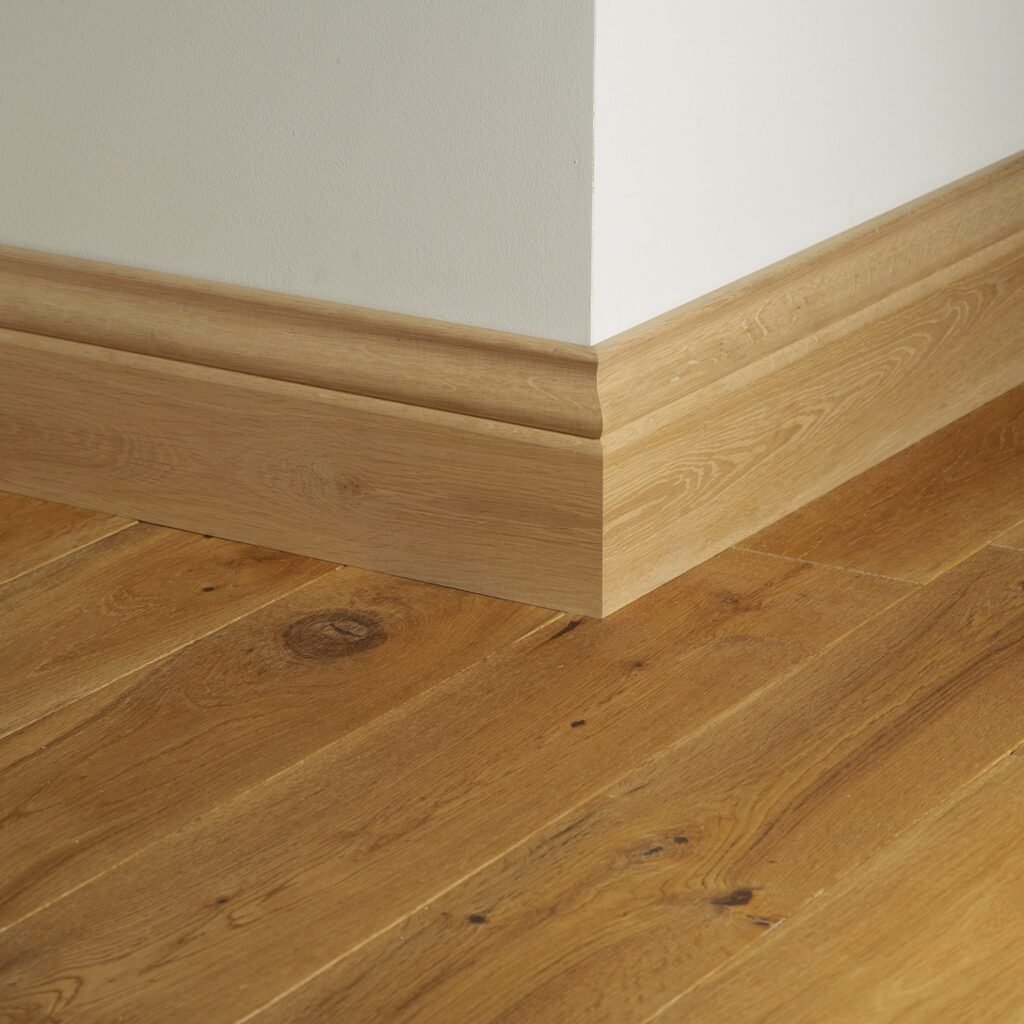
How Skirting Has Evolved in Modern Interior Design
Skirting has evolved from a primarily practical construction detail into an important interior finishing element. Traditional wooden profiles were commonly used to cover imperfections where walls met floors, while modern interiors offer MDF, PVC, metal, flush, recessed, and decorative profiles to suit different design requirements.
Contemporary skirting can create a minimalist transition between wall and floor, while selected profiles can also accommodate wiring or provide space for integrated lighting. In Dubai interiors, material selection should consider moisture exposure, cleaning requirements, impact levels, and the type of flooring being installed. For areas where water resistance and easy maintenance are priorities, PVC flooring can be coordinated with an appropriate moisture-resistant skirting solution.
What Are the Main Types of Skirting Boards?
The main types of skirting boards include wooden, MDF, PVC, metal, flush or recessed, and decorative profiles. Wooden skirting provides a traditional appearance and can be stained or painted, while MDF is a cost-effective option that works well in dry interior spaces. PVC is lightweight, moisture-resistant, and easier to clean, making it useful in areas exposed to splashes or frequent cleaning. Metal skirting provides strong impact and moisture resistance and suits contemporary or commercial interiors.
Flush and recessed skirting create a minimal, wall-aligned appearance, while decorative profiles add visual detail to classic interiors. The best option depends on the room’s moisture exposure, expected wear, maintenance requirements, and flooring finish. Where the floor itself requires a moisture-resistant solution, vinyl flooring may be considered alongside suitable wall-edge protection.
Materials Used in Skirting
The material of a skirting board determines its durability, appearance, and maintenance requirements.
Wood: Natural hardwoods like oak, walnut, or pine offer strength and elegance. Wood can be sanded and refinished, making it long-lasting, but it is sensitive to humidity and pests.
MDF: Affordable and versatile, MDF is widely used in modern interiors. It is smooth, easy to paint, and resistant to warping. However, it is less durable than hardwood and not recommended for damp environments.
PVC: Plastic-based skirting is lightweight, inexpensive, and waterproof. It is excellent for kitchens, bathrooms, and areas exposed to moisture.
Aluminum or Stainless Steel: These materials are modern, sleek, and highly durable. They are often used in commercial spaces and industrial-style homes.
Composite Materials: Made from recycled wood fibers and plastic, these boards are eco-friendly and durable. They combine the aesthetics of wood with the resilience of synthetic materials.
When selecting a material, homeowners should consider the room’s conditions and intended use. For example, wood may suit a living room, while PVC is better for wet areas. The choice of material not only impacts the longevity of the skirting but also influences the overall style of the interior.
The Role of Skirting in Interior Design
Skirting boards are more than just protective elements—they are essential design features. They create a visual transition between the wall and the floor, making the room appear polished and complete.
Skirting can enhance proportions in a room. High skirting boards are often used in traditional interiors with tall ceilings, adding grandeur and elegance. In contrast, low and minimalist skirting works well in modern homes, where the focus is on simplicity and clean lines.
Color also plays a significant role. White skirting is a timeless choice, creating contrast with darker walls and adding brightness. Alternatively, matching the skirting to the wall color creates a seamless effect, while coordinating it with the floor ties the room together.
Designers often use skirting as an opportunity for creativity. Profiles range from flat boards to detailed moldings, each contributing to a different aesthetic. Skirting can also be used to integrate modern features, such as hidden lighting or cable management.
By balancing function and design, skirting enhances both the beauty and practicality of a space. It demonstrates how small details can define the character of an interior.
Skirting Installation and Maintenance
Installing skirting boards is a straightforward process, though it requires precision. The wall and floor must be measured accurately before cutting boards to fit. Mitre joints are used for corners, ensuring neat and seamless connections. Skirting can be fixed using adhesive, nails, or screws, depending on the material and wall type.
For maintenance, skirting requires regular cleaning to prevent dust buildup. Wooden skirting may need polishing or repainting over time, while MDF and PVC are easier to maintain. In case of damage, individual sections can be replaced without major renovation.
Modern Trends in Skirting
Contemporary design has introduced innovative skirting options. Flush skirting, where the board sits level with the wall, is increasingly popular in minimalist interiors. Integrated LED lighting within skirting adds ambiance and functionality. Colored skirting, moving beyond traditional white, allows homeowners to make bold design statements.
Eco-friendly skirting made from recycled or sustainable materials reflects the growing focus on sustainability. Designers are also experimenting with mixed materials, combining wood and metal for unique effects. These trends highlight the role of skirting as a creative and customizable design feature.
Common Mistakes in Choosing Skirting
Many homeowners underestimate the importance of skirting and make mistakes such as choosing the wrong size, material, or color. Oversized skirting in small rooms can overwhelm the space, while very small boards in large rooms may look disproportionate.
Selecting unsuitable materials for certain environments—such as using MDF in bathrooms—leads to damage. Poor installation, especially with visible gaps, reduces the aesthetic appeal. Another common mistake is ignoring the overall interior style; skirting should complement both walls and flooring for harmony.
Choosing the Right Skirting for Your Home
When selecting skirting, homeowners should consider factors like room size, interior style, flooring type, and budget. Classic homes may benefit from decorative wooden skirting, while modern apartments often look better with sleek, flush MDF or PVC boards. Durability and ease of maintenance are also crucial, especially in high-traffic areas.
Consulting with an interior designer can help ensure that the skirting enhances the overall aesthetic of the space. Ultimately, the right skirting is the one that balances functionality with visual appeal, complementing the home’s design.
Conclusion
Skirting boards, though often overlooked, are vital components of interior design. They protect walls, cover imperfections, and enhance the harmony between floors and walls. Over time, skirting has evolved from simple wood strips to diverse options in MDF, PVC, metal, and composite materials.
The choice of skirting depends on functionality, style, and personal preference. Whether traditional or modern, ornate or minimalist, skirting plays a crucial role in defining the character of a room. With proper selection and installation, skirting not only ensures durability but also elevates the beauty of any interior.
The most important frequently asked questions about skirting
Q1: What is skirting?
A: Skirting is a narrow board or trim installed along the bottom of an interior wall where it meets the floor. It protects the wall and provides a neat finished edge.
Q2: What are skirting boards for?
A: Skirting boards protect walls from impacts, scuffs, furniture, and cleaning equipment while covering the joint between the wall and floor.
Q3: What do skirting boards do?
A: They protect the lower wall, conceal small floor-edge gaps and imperfections, and create a finished transition between flooring and walls.
Q4: Why do you need skirting boards?
A: Skirting is useful for protecting vulnerable wall edges and creating a cleaner, more complete appearance. It can also conceal perimeter gaps associated with some flooring installations.
Q5: What is skirting in construction?
A: In construction, skirting is a finishing element installed at the base of interior walls to cover the wall-to-floor junction and protect the wall from everyday damage.
Q6: What is skirting in flooring?
A: In flooring, skirting provides a finished border around the perimeter of a room and can conceal small expansion or installation gaps where applicable.
Q7: What is skirting in interior design?
A: Skirting is an interior design feature that visually connects walls and floors. Its profile, height, color, and material can be selected to complement the room’s overall style.
Q8: What materials are used for skirting boards?
A: Common materials include wood, MDF, PVC, and metal. Flush and recessed systems are also available for minimalist interiors.
Q9: Which skirting material is suitable for humid areas?
A: Moisture-resistant materials such as PVC are generally more suitable for areas exposed to water or frequent cleaning than untreated MDF or timber.
Q10: Can skirting be used with different types of flooring?
A: Yes. Skirting can be coordinated with timber, vinyl, laminate, tile, and other flooring types. The profile and material should suit the flooring system and room conditions.
